
The Breast Lift & Fullness Center

The weight came off. Your breasts went with it.

Deflation, drop, and skin that no longer holds its shape are the most common — and least discussed — consequence of major weight loss. Rebuilding the breast is its own discipline, and it is the one we've spent twenty years refining.

Dr. John LoMonaco, double board certified plastic surgeon, in his Houston practice
Why breasts change the most

The breast is mostly fat inside a skin envelope.

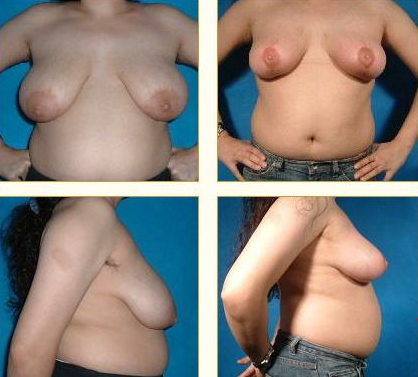
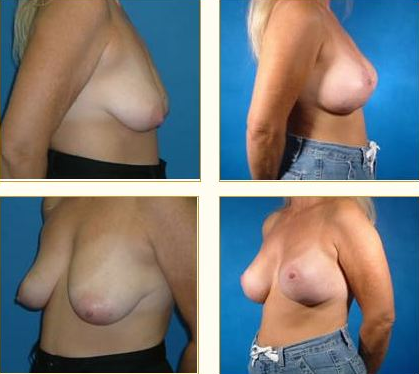
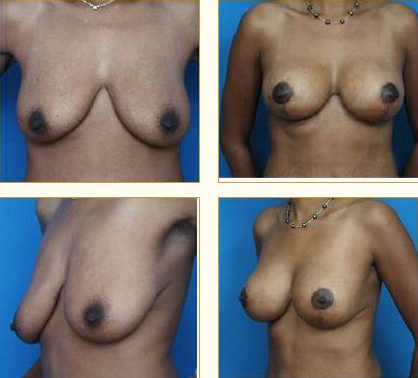
When you lose 100 pounds, you lose the volume that filled the breast — but the envelope stays the size it was stretched to. The result is a breast that is flatter at the top, longer at the bottom, and sits lower on the chest, often with a nipple that has migrated downward and a fold that has dropped with it.

This is not something a bra, a workout, or an implant alone can fix. It is a shape problem before it is a size problem.

Lost volume

Upper pole fullness goes first and rarely returns on its own.

Stretched envelope

Skin that carried weight for years cannot retract to fit less.

Position change

The nipple and breast fold both descend, changing proportion entirely.

What patients tell us
  • "My breasts disappeared."
  • "Nothing fits me anymore."
  • "I don't want to be seen without a bra."
  • "I look thinner but older."
  • "This is the part nobody warned me about."
Your options

Six paths. One is yours.

There is no packaged breast procedure for weight loss patients. The plan comes from your skin quality, your remaining volume, your nipple position, and what you want to look like in clothes and out of them.

Breast Lift (Mastopexy)

Reposition and reshape what you already have.

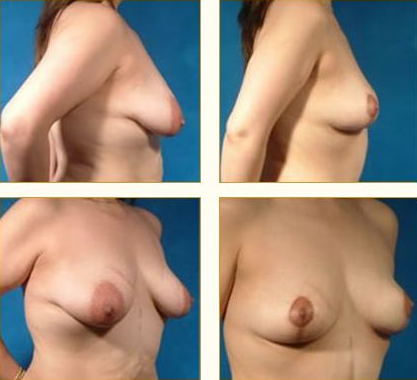
Excess skin is removed, the breast tissue is reshaped and moved higher on the chest, and the nipple is returned to its natural position. For patients with enough remaining volume, a lift alone restores shape without adding anything.
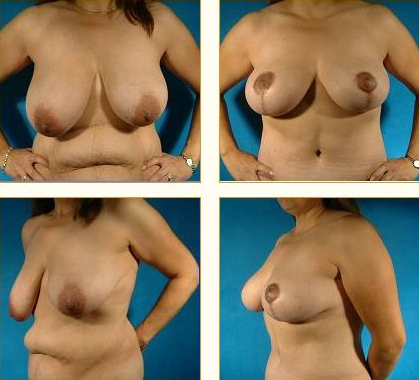
Lift with Implants

Shape and fullness together.

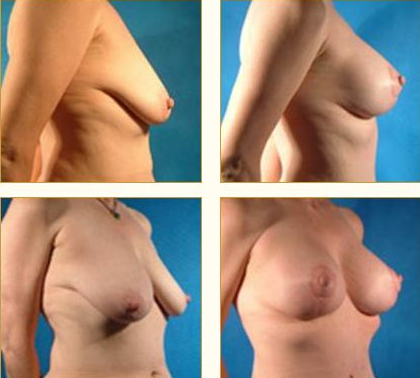
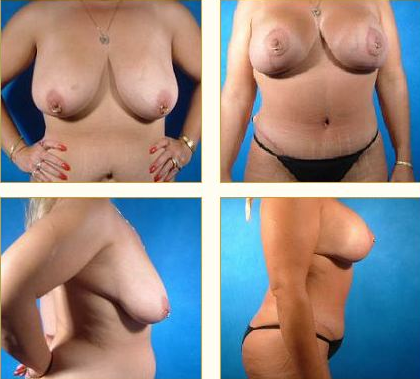
When the upper breast has deflated, a lift restores position and an implant restores volume. Doing both in one operation requires careful planning — the implant must be sized to the new envelope, not the old one.

Breast Augmentation

Volume when position is still good.

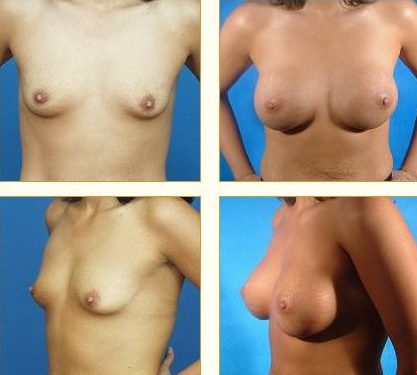
Some weight loss patients keep good nipple position and skin quality and simply need volume replaced. Silicone or saline, above or below the muscle, sized to your frame rather than to a number.

Auto-Augmentation

Rebuilt from your own tissue.

Rather than discarding the deflated lower breast, that tissue is rotated and secured to rebuild upper fullness. It is a technically demanding option for patients who prefer not to have an implant.

Upper Body Lift

When the roll continues past the breast.

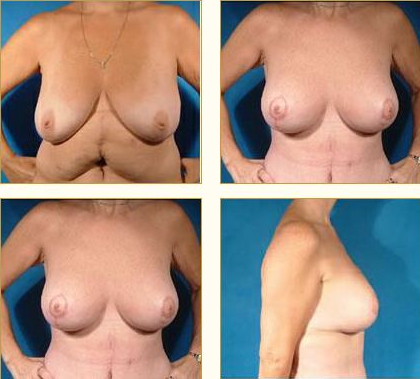
Massive weight loss often leaves loose skin that continues from the breast into the side of the chest and back. An upper body lift treats the breast and that lateral roll through a coordinated set of incisions.

Revision & Reconstruction

For results that didn't hold.

Bottoming out, implant malposition, widened scars, or a lift that was done before your weight stabilized. Dr. LoMonaco is regularly asked to correct breast surgery performed elsewhere.

Meet your surgeon

Dr. John LoMonaco

Dr. LoMonaco has spent his career on one of the most technically demanding patients in plastic surgery: the person who lost 100 pounds or more. He helped pioneer the full body lift, has been featured on Skin Tight, Big Medicine, and My 600-lb Life, and is regularly asked to review complex reconstructive cases.

Double board certified
Plastic surgery & general surgery
Pioneer of the full body lift
Developed over 20 years ago
5,000+ procedures
Focused on weight loss patients
500+ five-star reviews
Google, RealSelf, Yelp, Vitals
Meet Dr. LoMonaco
Dr. John LoMonaco in scrubs at his Houston practice

Welcome video — 90 seconds with Dr. LoMonaco

Recovery roadmap

Breast recovery is gentler than you expect.

Compared with a body lift, breast surgery is a shorter operation with a shorter recovery. Most patients are surprised by how manageable the first week is.

  1. 01

    Before surgery

    Labs, protein and vitamin targets, a mammogram if you're due, and a caregiver plan. Nicotine stops six weeks out.

  2. 02

    Week 1

    Rest and a supportive surgical bra. Discomfort after a lift is usually described as soreness, not sharp pain. Arms stay low.

  3. 03

    Weeks 2–3

    Most desk work resumes. Sutures and any drains typically come out. Swelling begins to settle.

  4. 04

    Weeks 4–6

    Lower body activity returns first, then chest and arms. The breast starts to soften and settle into position.

  5. 05

    Months 3–6

    Final shape emerges as swelling resolves and tissue relaxes into the new envelope.

  6. 06

    Scar maturation

    Lift scars fade over 12–18 months with dedicated scar care. We plan them where clothing hides them.

Questions patients actually ask

Straight answers, before you call.

It depends on two things: where your nipple sits relative to the breast fold, and how much volume you have left. Good position with lost volume often means implants alone. Descended position with adequate tissue often means a lift alone. Most weight loss patients fall in between and do best with both.

You already changed your life. Let's help your body catch up.

Book your complimentary 15-minute Weight Loss Transformation Assessment. Whether you're local or traveling to Houston, we'll help you understand your options and build a personalized plan.

Houston, Texas & virtual consultations nationwide